
Elementary Program
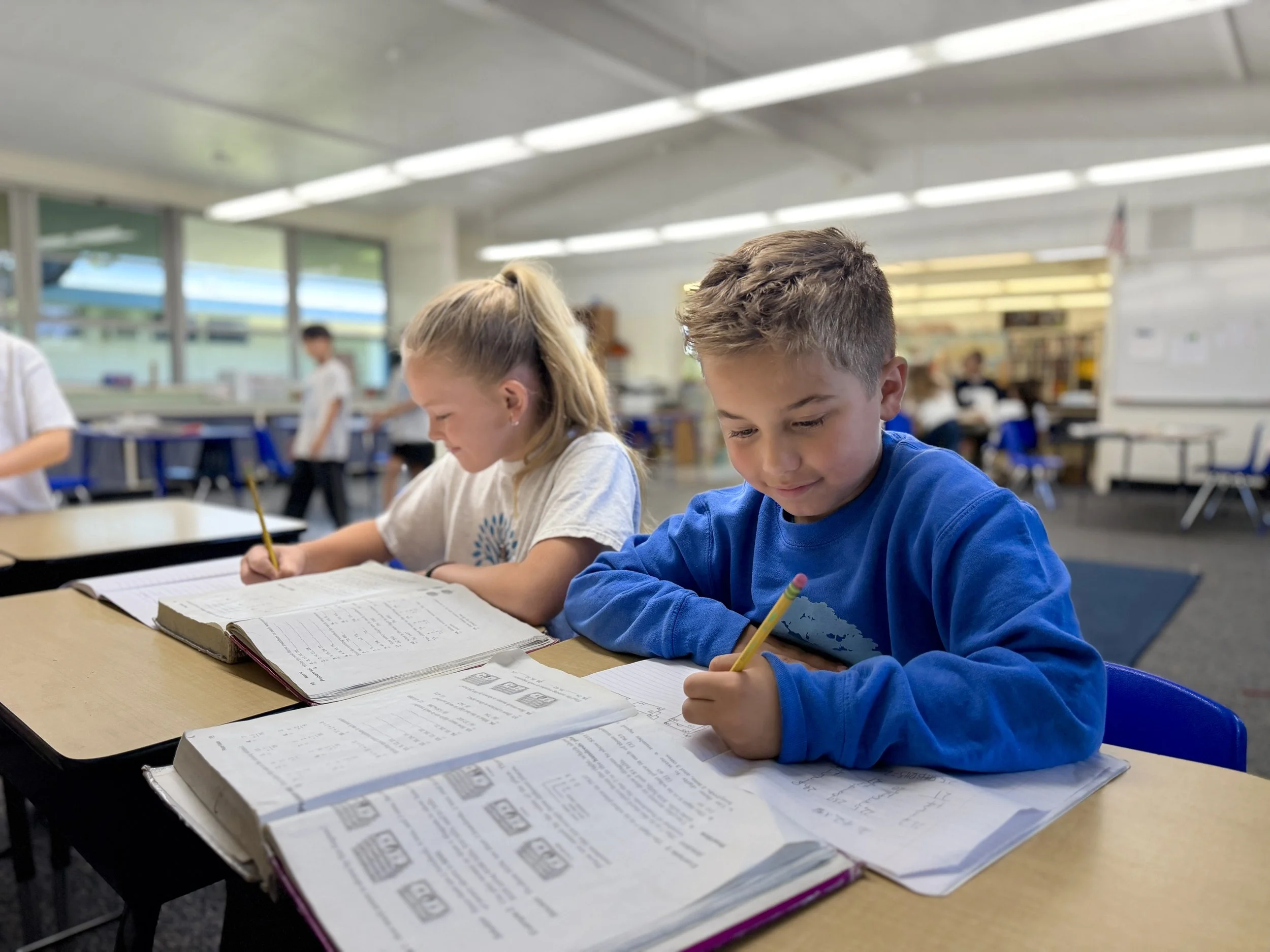
1st - 5th Grade
About the Elementary Program
The Elementary years represent what Dr. Maria Montessori referred to as the Age of Reason - a developmental stage marked by rapid growth in imagination, logic, moral awareness, and complex thinking. During this time, children move beyond purely concrete learning and begin to explore ideas abstractly, questioning not only what things are, but how and why they work.
In the Montessori Elementary classroom, learning is driven by imaginative intelligence and curiosity. Subjects are deeply interconnected, allowing children to see relationships across disciplines such as mathematics, science, history, geography, language arts, literature, and technology. As students understand the purpose behind their work, learning becomes meaningful, engaging, and enduring.
Extended, uninterrupted work periods support sustained concentration and deeper thinking. Students are encouraged to plan their work, manage their time, and take increasing responsibility for their learning. Teachers guide and challenge students through individualized lessons, small group instruction, and ongoing observation.
Beyond academics, the Elementary program emphasizes character development and social responsibility. Children learn essential life skills such as conflict resolution, collaboration, leadership, and problem-solving. Opportunities for enrichment - including field trips, community service, and physical education - help students connect their learning to the world around them and develop a strong sense of purpose and responsibility.
Academic Rigor and Thoughtful Guidance
Our Elementary curriculum follows Montessori Lower and Upper Elementary standards while also aligning with the California Department of Education / CORE Standards. This ensures a rigorous, well-rounded academic experience that prepares students for future success while honoring the Montessori philosophy.
Independence, Community, and Moral Development
At this stage, children develop a strong sense of right and wrong shaped by their relationships, work, and understanding of the world. Within the classroom community, students learn to respect differing perspectives, advocate for themselves, and contribute meaningfully to their group - building confidence, integrity, and empathy.
Community, Responsibility, and Independence
The mixed-age Primary classroom encourages cooperation rather than competition. Children learn to care for their environment, respect one another, and take responsibility for their choices. These daily experiences help children develop independence, self-confidence, and a strong sense of accountability.
A Typical Day in the Elementary Classroom
7 - 9 a.m.
Before School Care
9 - 9:10 a.m.
Greeting / Pledge of Allegiance
9:10 - 10 a.m.
Presentation of Lessons / Work Time
10 - 10:20 a.m.
Snack
10:20 - 12 p.m.
Work Time
12 - 12:30 p.m.
Lunch Time
12:30 - 1:15 p.m.
Physical Education
Mondays - Thursdays
PE with Coach Shannon
Fridays
Playground Time
Music Education
Fridays
11:00 - 11:30 a.m.
Music Science
11:30 a.m. - 12:00 p.m.
Ukulele
1:30 - 3 p.m.
Work Time
Art
Open Lab
3 - 5 p.m.
After School Care
Field Trips & Going Out
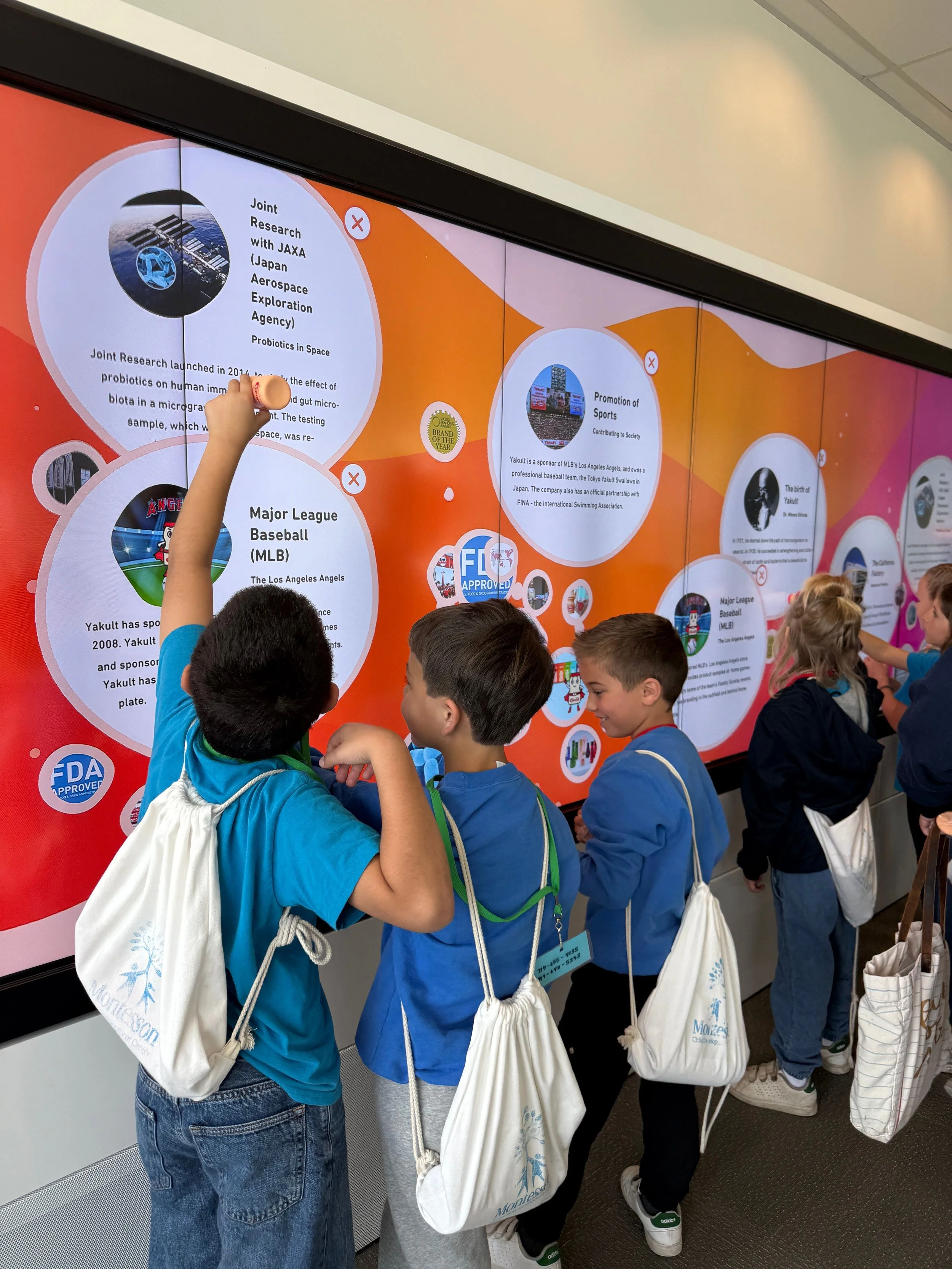
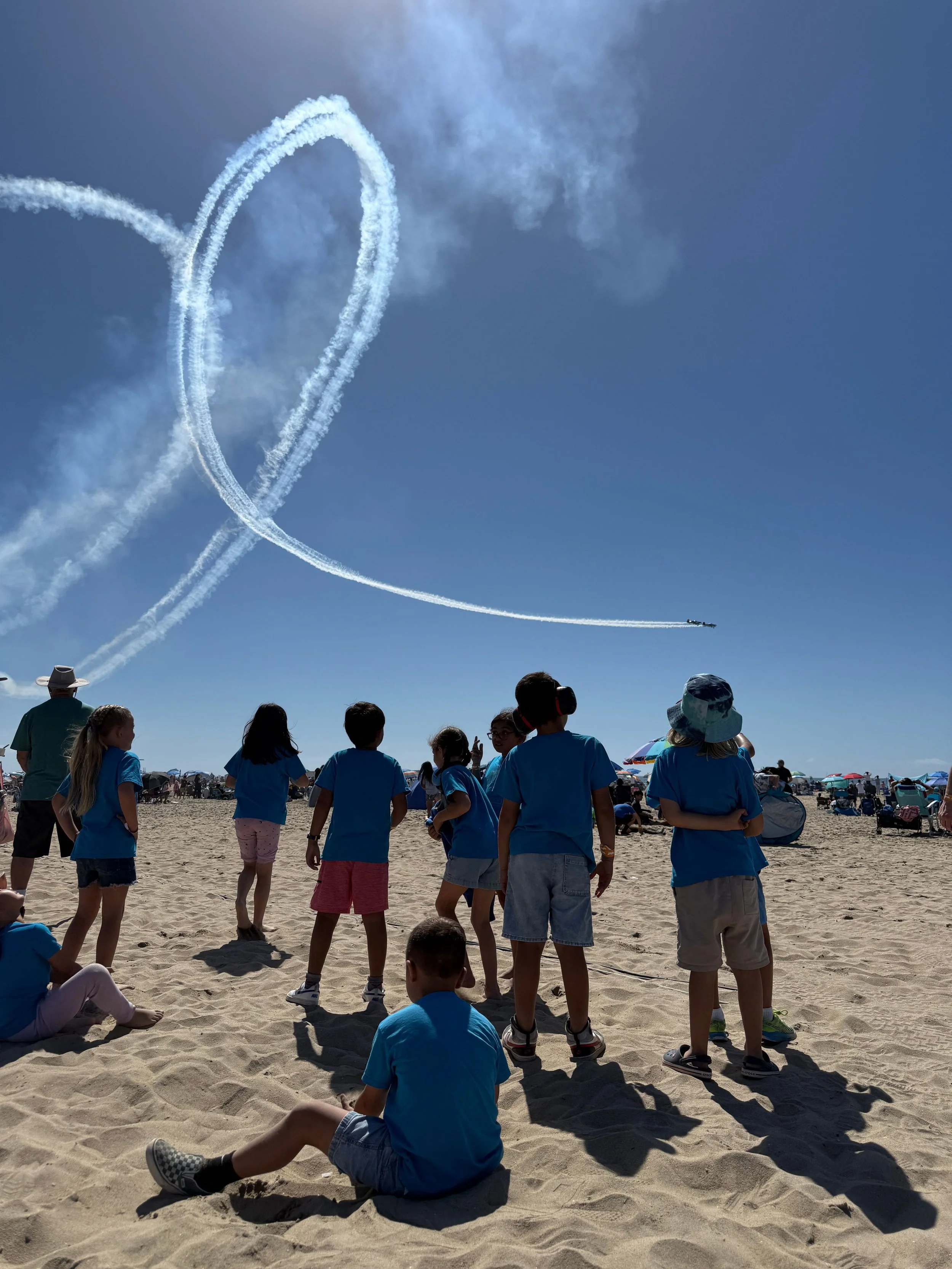
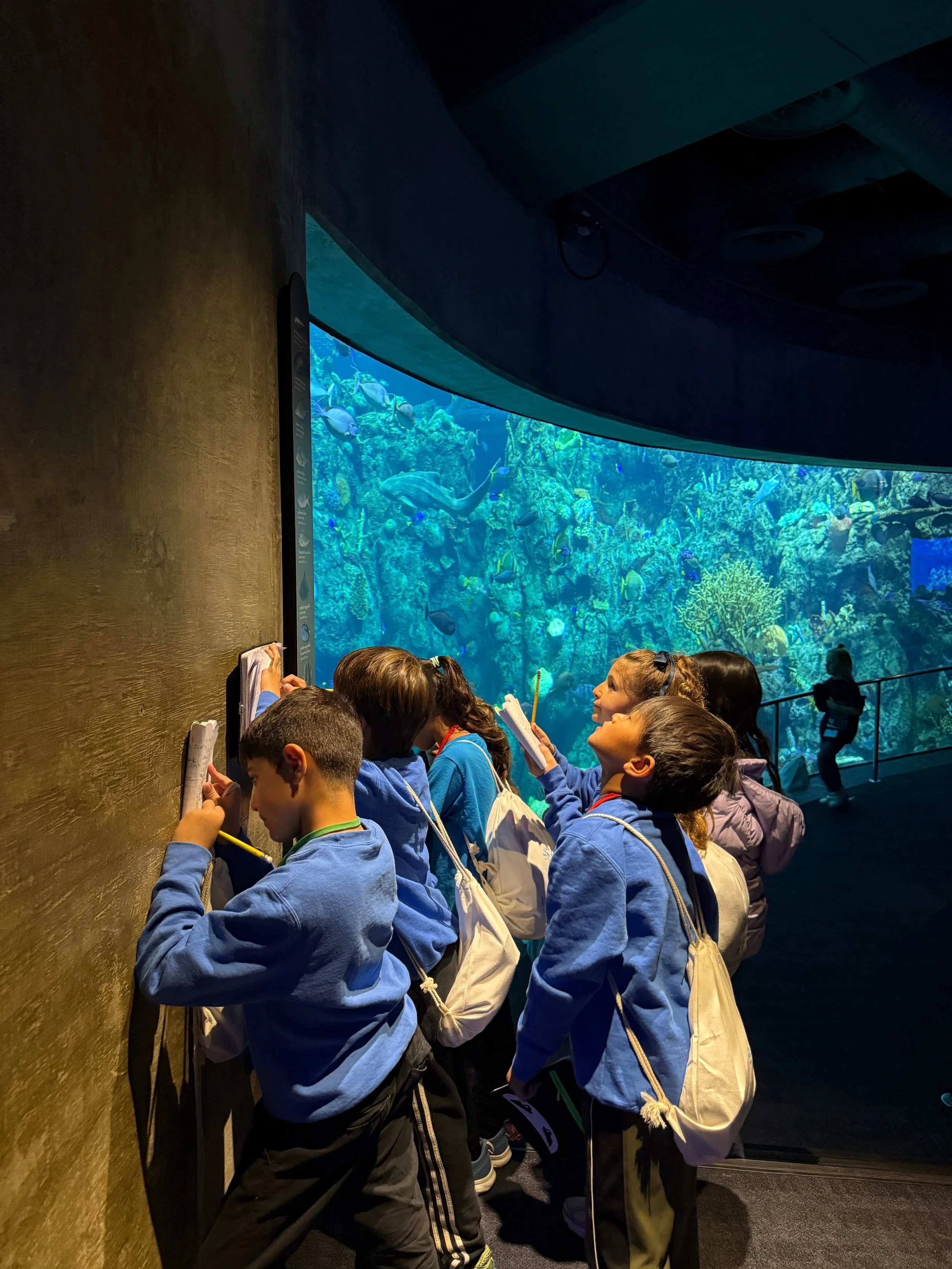
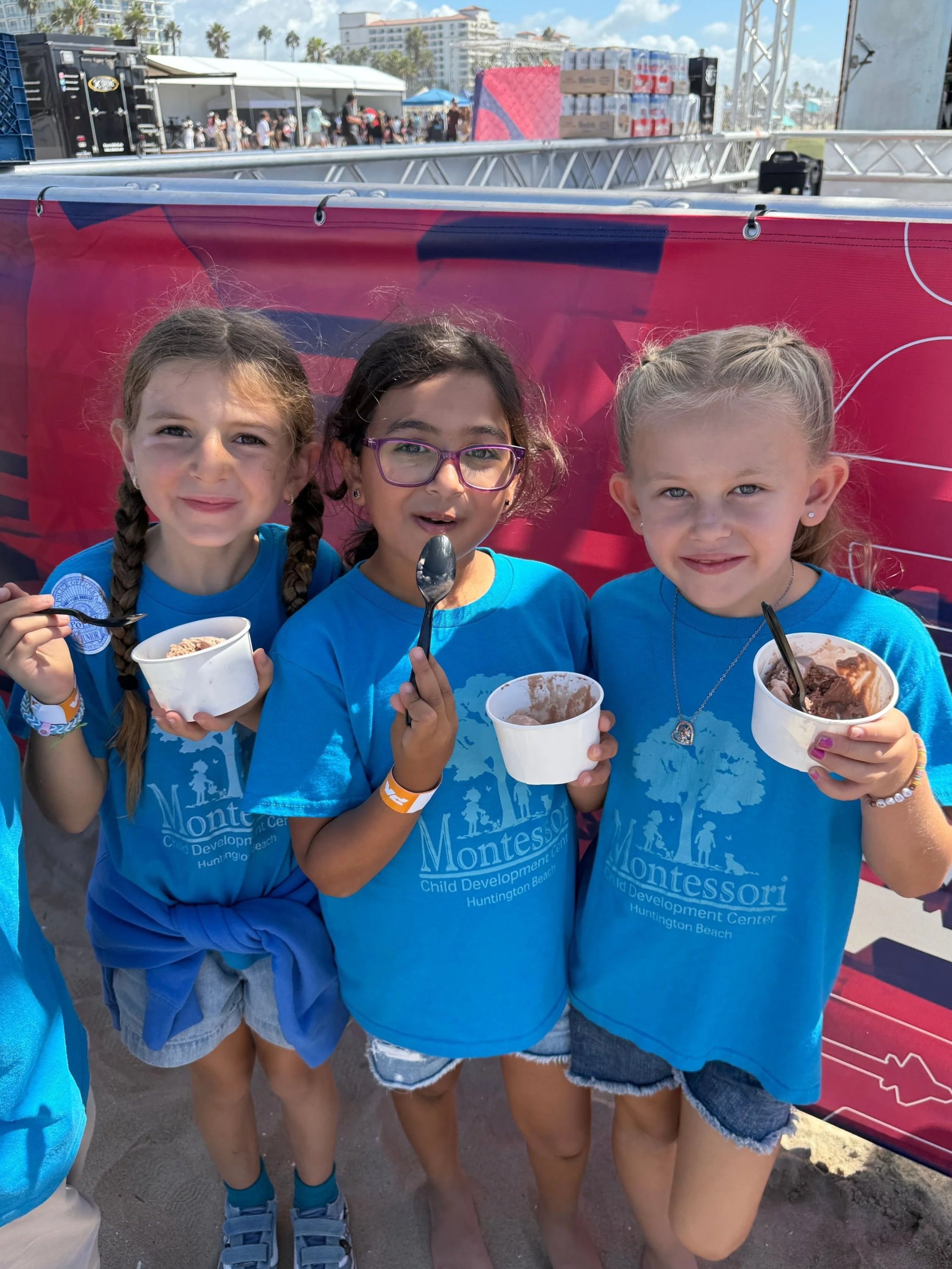
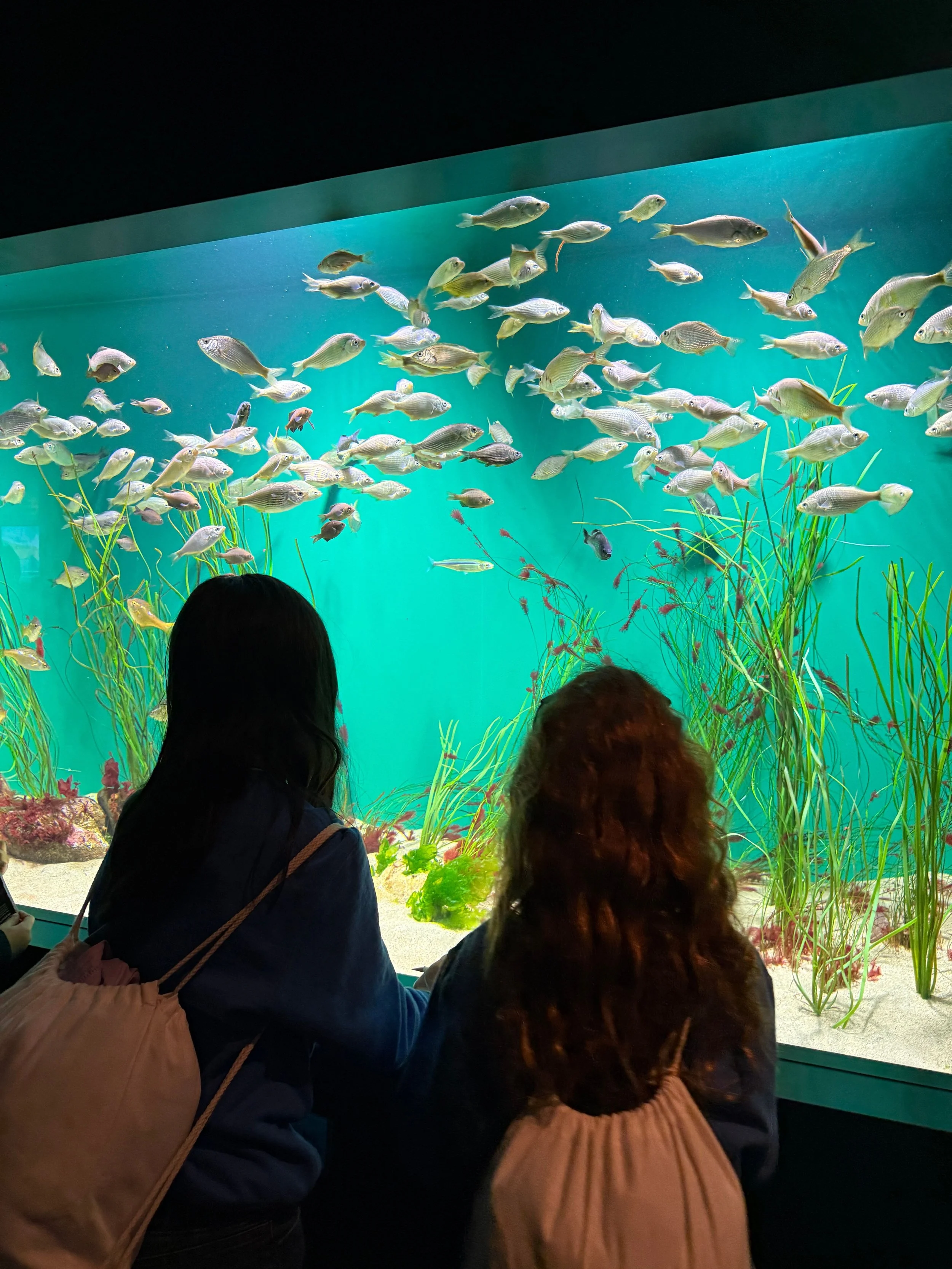
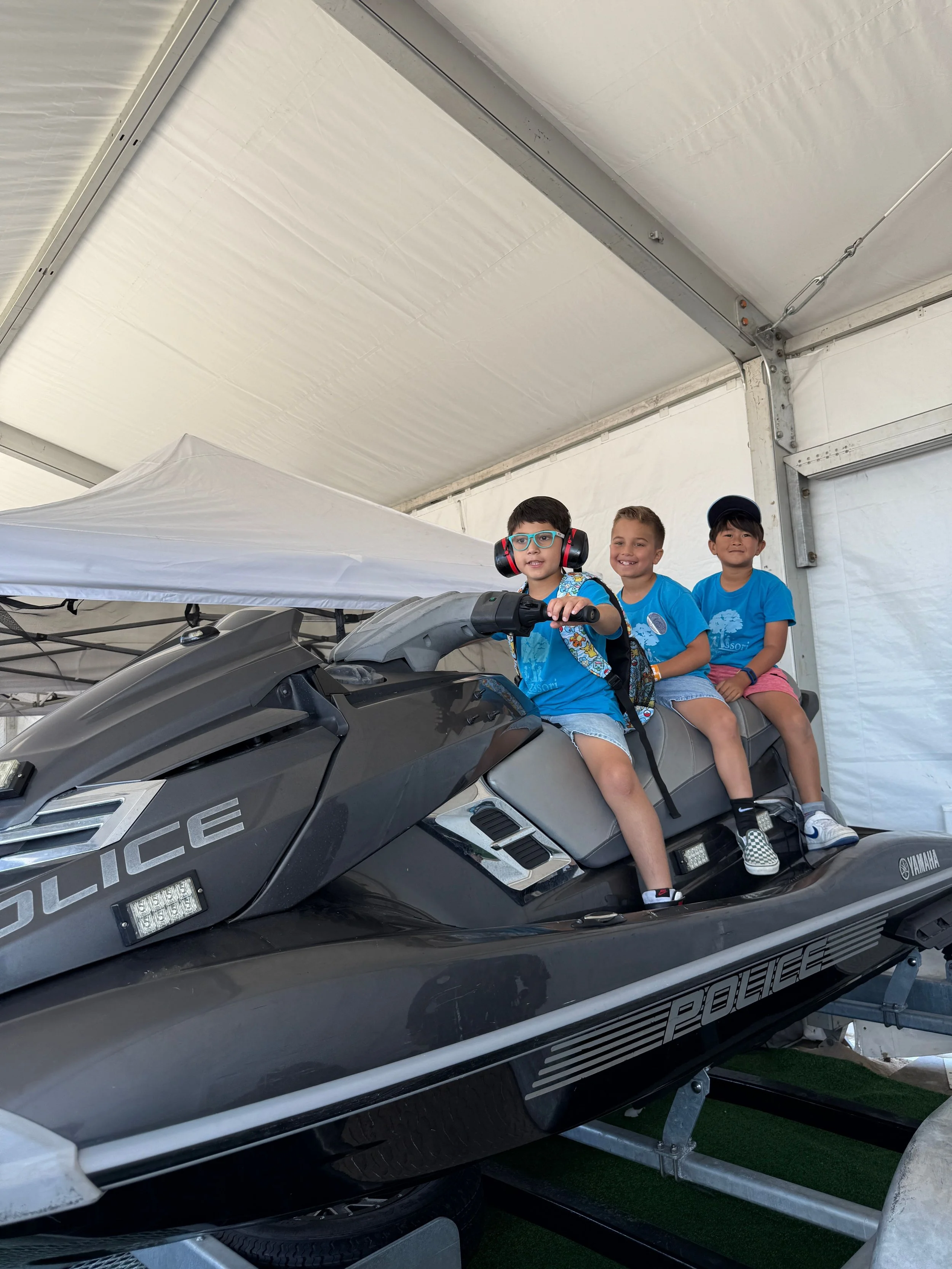
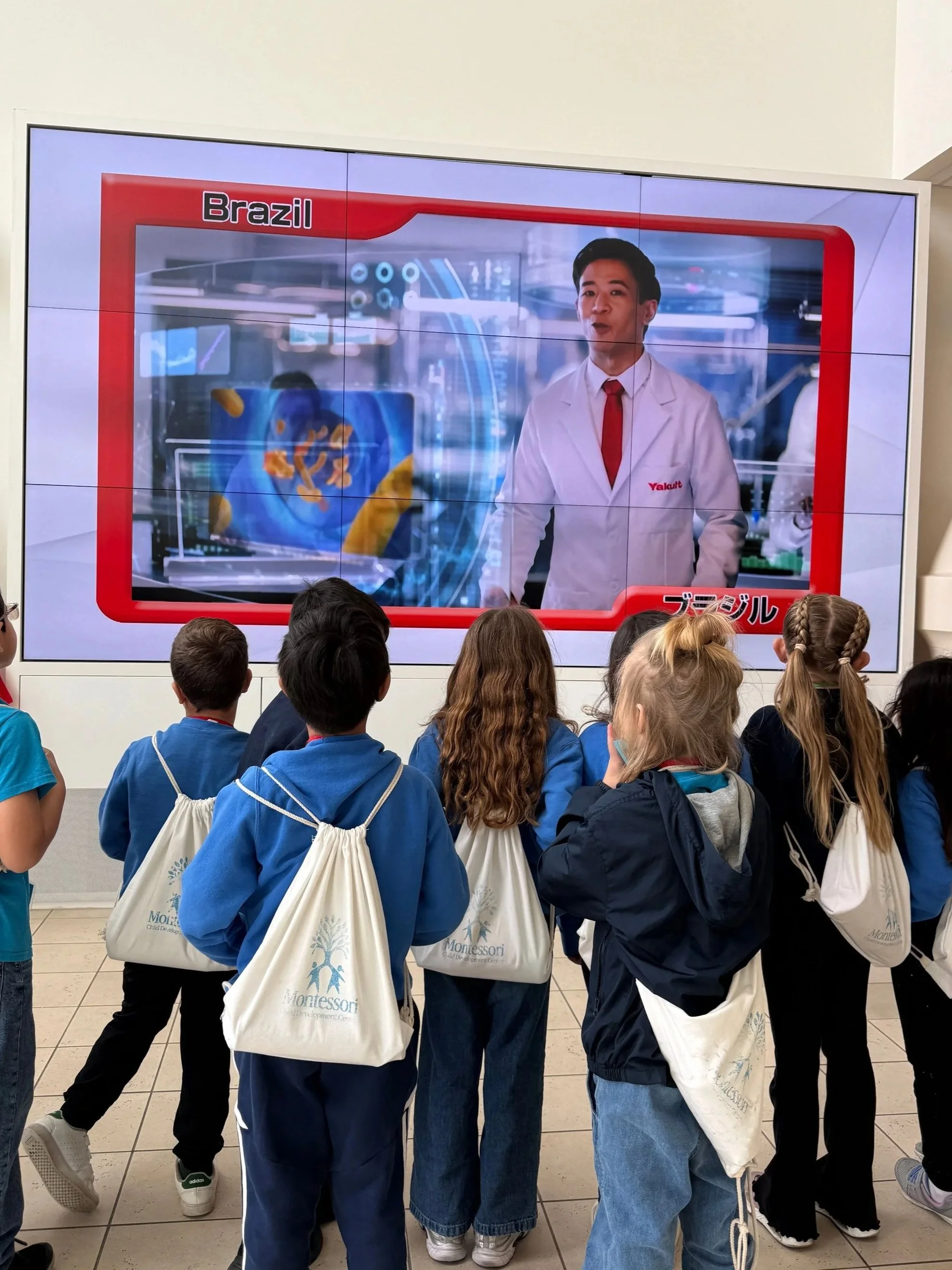
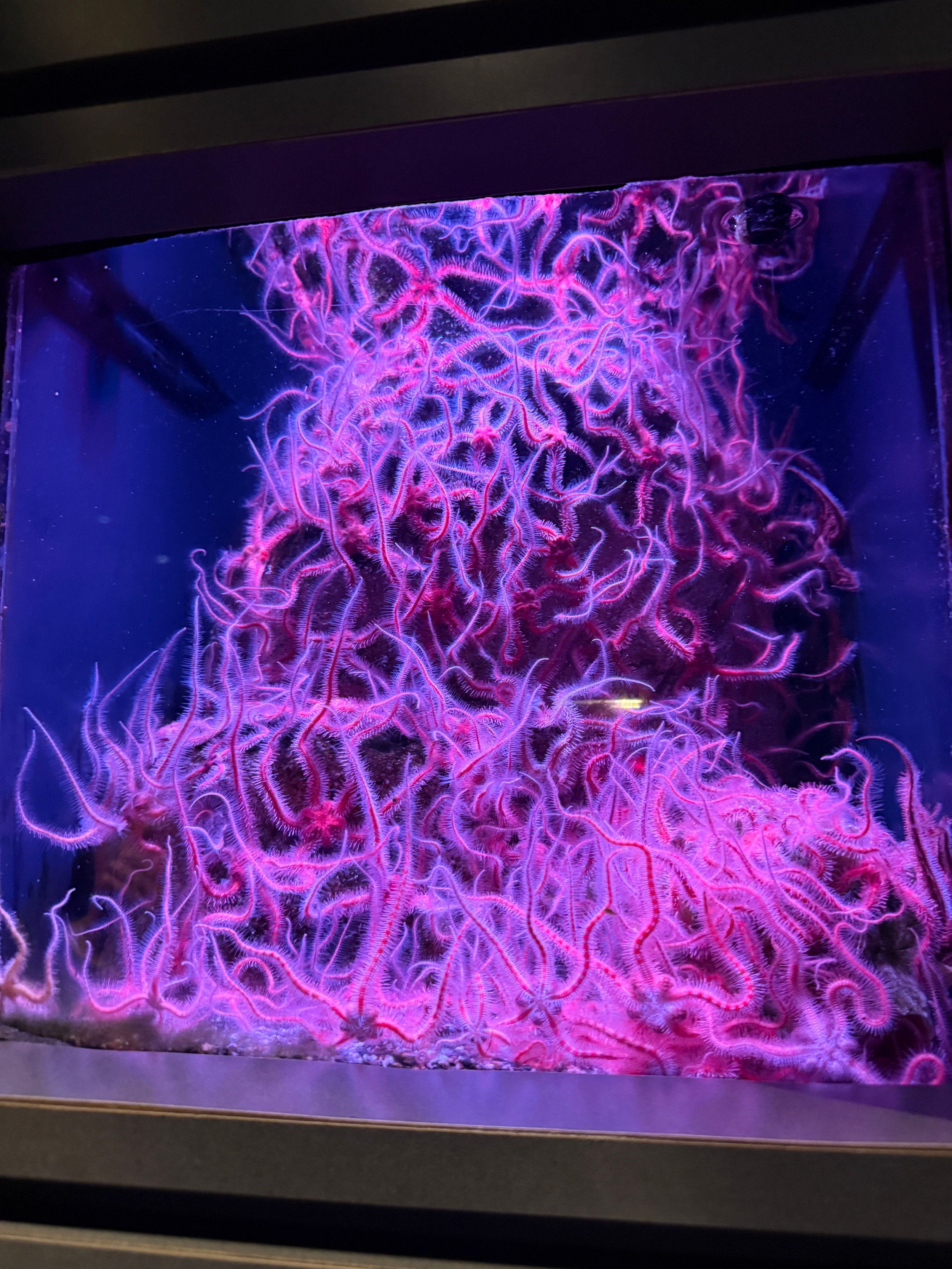
An integral part of Montessori education is that learning extends beyond the classroom walls. This practice, known as Going Out, allows children to take their classroom learning into the real world, making education meaningful, relevant, and alive.
Through Going Out experiences, students learn that answers are not found only in books or from teachers, but through exploration, observation, and connection with their community. Children meet experts in various fields, ask thoughtful questions, conduct investigations, and draw conclusions based on firsthand experiences.
Whether visiting a wildlife preserve, exploring local businesses, or engaging in community spaces, students connect their studies to real-life applications. For example, a trip to a wildlife preserve may include meeting an ornithologist and learning about bird research - bringing science, curiosity, and discovery together in a powerful way.
These experiences foster independence, confidence, curiosity, and a deeper understanding of the world beyond the classroom.